


Dear Danielle,
I know many talented and thoughtful UXers who excel at their craft. They produce incredible designs with beautiful visuals, conjure the most mesmerizing animations, and write sound research reports with rich insights.
Yet they struggle with being truly influential in their organizations. When I speak to them to help diagnose the problems, I often hear them describe at least one or all of these feelings:
They feel their insights miss the mark, and seldom influence the decisions of key stakeholders.
They feel they constantly have to prove themselves and their worth.
They feel they don’t get what’s rightfully theirs or their team’s.
They feel it’s always an uphill battle with their stakeholders.
They feel they are misunderstood all the time.
They feel alone.
Ultimately, they feel they lack influence at the right levels to change their positions for the better. But influence can’t be achieved in isolation.
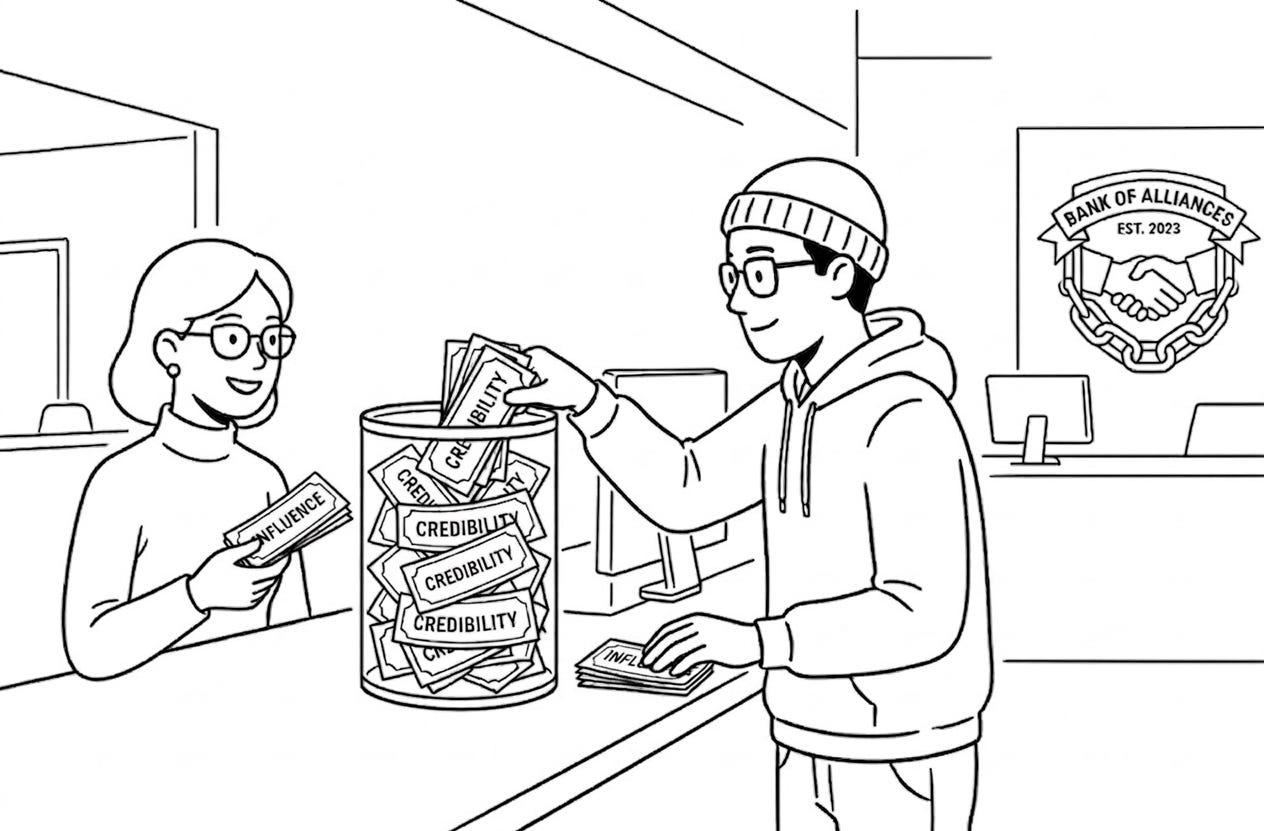
To have influence, you have to have credibility.
As UXers, we place a lot of weight on our craft. We often feel that to be credible, we have to be good at what we do. That is true — we have to be functionally sound at our job. We have to be experts at our craft. But producing quality project output is only half the battle, and I’d argue it’s table stakes for what we do. The high-quality content and artifacts we produce mean nothing if we can’t get buy-in from our stakeholders.
To get buy-in, you have to be credible. And you must view credibility building as an investment. It is earned, which means you have to put in effort. Just like all other investments, it takes time. You have to form good habits consistently. But also know that not everything you put into this investment will have a positive return. That said, the more of this currency you have, the easier it will be to achieve team-oriented goals like hiring, getting budget, and advocating for merit and promotions on your team — which in turn, are all key ingredients to extend your influence in the organization, and over time allow you to build and grow your UX practice.
There’s a lot to unpack here, and I have thoughts. So many thoughts, in fact, that I’ll be spending the next few letters breaking down the principles I’ve found most effective for building credibility over the course of my career. But let’s start with the one I believe matters most.
Form alliances.
What does “form alliances” really mean at the end of the day? You might think about this as “developing empathy for your partners” or “understanding their needs.” It could be any number of those things, but to put it bluntly, what you are doing is scratching someone’s back (metaphorically). And yes, so they’ll scratch yours. Some might think it’s cynical, but we are all human and fundamentally this is how trust gets built across teams and functions.
So how do you effectively scratch someone’s back? I believe it comes down to four things:
Identify an influential person. Figure out who in your organization you respect, who’s in a key influential position, who possesses skills complementary to yours — and make time to connect with them. Make a list. Note down their capabilities, their decision-making areas, and where there might be synergies with your own work. This could be a team lead on product, a manager on the sales team, or someone in engineering leadership. The point is to be intentional about who you want to build a relationship with and really understand the why.
Search for common ground. Set up a 1:1 to get to know them. Walk into the meeting prepared (you are an UXer, after all). Use your research skills: ask good questions, be an active listener, and be intentional about what you want to learn. Understand their needs and motivations, both personal and professional, and figure out where they overlap with yours. If there is potential in the partnership, ask if you can set up recurring time together.
Make their life easier. Once you understand their world, identify skills, knowledge, or projects you’re working on that can help them advance their agenda. Here’s the key: instead of asking “how can I help?”, offer solutions proactively. Come to your meetings with a list of challenges you’ve noticed and ideas for how you might tackle them together. Your goal is to genuinely make their life easier — not in a performative way, but in a way that demonstrates the unique value you and your team bring to the table.
Help them help you. Build the relationship, strengthen the alliance over time. Then, when you need support and help, be specific and constructive. Identify one or two things your colleague can do to support you, and ask directly.
The beauty of strong alliances is that they compound. Once you’ve built trust with a few key people, they become advocates for your work, your team, and your perspective — often in rooms you’re not in. And in UX, where so many of our battles are won in the spaces between meetings, having someone in your corner who genuinely understands your value is everything.
I’ll be back in the next couple of weeks to unpack the other principles I’ve found essential to building credibility. But if I were to start anywhere, it’s here. Because no amount of personal brand or influence tactics will matter if you don’t have people who trust you enough to go to bat for you.
From playing calendar Tetris in two back-to-back short weeks,
Dave
If this isn’t one of the most important posts I’ll read from you then this one is truly at the top. I’ve been in those shoes before where I have struggled on credibility. But I also doubted myself too. You have to have some confidence in being able to show up in a room to present your findings and display your solutions, but that work comes before with others you work with. Thank you for writing this today.