


Dear Danielle,
As with New Year’s resolutions, we work with our teams to develop their growth plans at the start of every year, based on feedback they received at the end of the previous year, coupled with their interest, passion and growth ambitions.
In the check-ins that follow, I consistently hear the same frustrations; some flavour of “Sorry, I just haven’t had time to make progress on my growth plans.”
I empathize. Things are just so busy. Between the projects, the meetings about the projects, the meetings to debrief the meetings about the projects, and the extracurriculars and side projects that folks inevitably sign up for — it’s easy for growth plans to become an afterthought.
But I also know that a lot of growth plans are poorly designed from the get-go. Many people find it difficult to make time for their growth plans because they’re designed as a separate entity to their day-to-day, and there’s little synergy between how they might make progress on their growth plans and their day-to-day job.
In other words, often growth plans weren’t set up for success in the first place.
So I’m proposing we rethink growth plans as part of your job so that you make progress on them as you do your work.
A helpful framework I’ve been using with my team is the 70/20/10 rule: 70% of the learning should be done on the job and as part of your job, by doing, experimenting and being hands-on. 20% is learning through others - your peers, mentors, your network. Then the last 10% through study - conferences, books, online courses, webinar. I see most people have it reversed where 70% of their growth plan comes from study, and that’s why it’s so hard to find time.
AI learning and development is a prime example of this. Many people approach AI learning as this massive endeavour that they feel they must carve out a huge chunk of time in their day or week to tackle. They feel this imposter syndrome where they feel like they aren’t expert enough at prompting to use Claude Chat proficiently, or they aren’t “dev enough” to navigate Cursor. So much time is spent on watching YouTube tutorials, reading up articles, researching the best way to approach learning AI.
Instead, the learning should be baked into the day-to-day. Start with smaller tasks and experiments. For researchers, that means using LLMs to help you draft research briefs and discussion guides. For designers, that could look like getting comfortable with prompting in Figma Make and asking it to recreate a screen in your product. Repeat these behaviours and tasks to understand what AI does well, learn and iterate. Once you feel more comfortable, graduate to the more complex tasks. For example, for researchers, build custom agents to help you automate repeatable tasks in your entire research flows. For designers, build an MCP for your design system and connect it to your vibe coding tool so the vibe-coded prototypes look and feel more consistent.
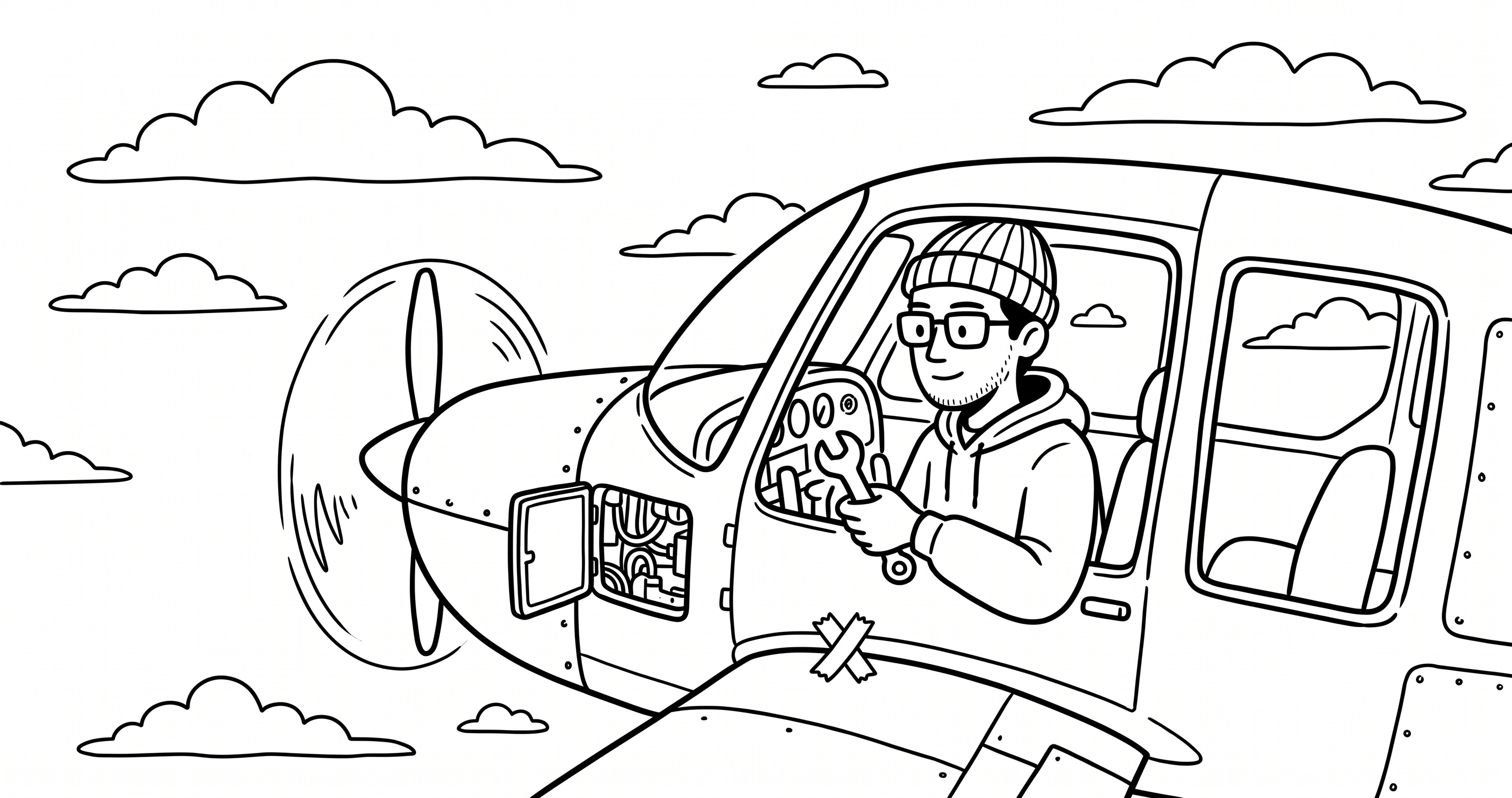
At the end of the day, when it comes to AI learning and development, as Nike guides us, “Just Do It!”. Because the truth is, no one really knows what they are doing when it comes to AI. But you can become more proficient at it by getting hands on with it. Sometimes, it is ok to build the plane as you fly it.
From trying to retrain a rogue AI agent,
Dave