


Dear Danielle,
When my older daughter was born, like many first-time parents, I read countless books searching for answers on how to be the “best” parent. In my search, one book stuck with me: The Gardener and the Carpenter by Alison Gopnik.
Gopnik describes two parenting styles. The “carpenter” parents, who believe a child is raw material to be crafted and a specific outcome can be achieved if the child is molded a certain way, usually in pursuit of a stereotypically high-earning, high-prestige career. Think doctor, lawyer, engineer, astronaut.
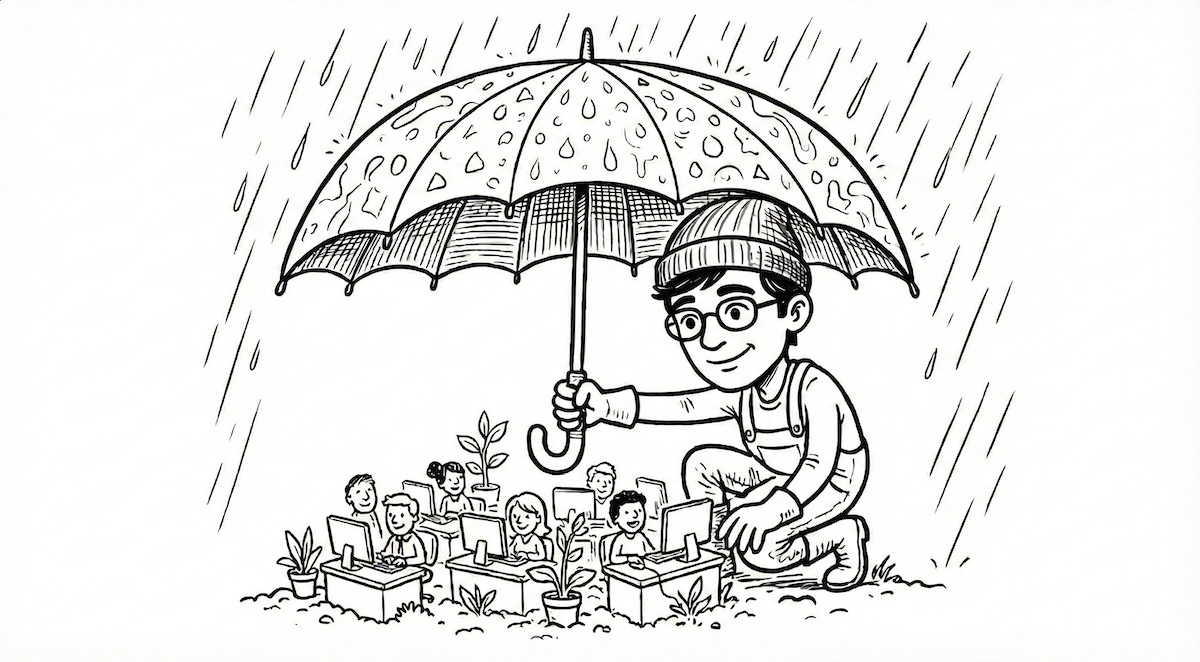
Then there are the “gardeners”. Gardener parents recognize they cannot control how their children grow. But instead, they focus on fostering the right environment for them to thrive. They teach the kids critical life skills and guiding principles to help them succeed in life. So when life gets hard, the children know how to navigate those challenges.
Throughout my career, I've observed this powerful analogy manifest in people management as well.
I’ve worked with carpenter managers who constantly helicopter-manage their teams, provide overly specific directives, and berate them when mistakes are made — all with the goal of shaping outputs to be exactly how they want it. This management style creates a high-fear, low-trust culture that doesn’t build resiliency. When faced with tough decisions, organizational pivots, and ambiguity, these teams become paralyzed. But worst of all, it backfires: teams become dependent on their manager for every decision, which strains the manager's capacity and burns everyone out.
Gardener managers, on the other hand, understand that talent needs to be cultivated. They give their teams the tools to thrive, teach them how to make decisions amid ambiguity, and guide them with principles to navigate organizational complexity. They act as “shit umbrellas” to filter out noise and enable high-quality work. They celebrate wins loudly and publicly, ensuring their teams get the visibility and recognition they deserve. Instead of being prescriptive, gardener managers focus on fostering the necessary environment for teams to succeed.
Of course, as with most things, we need to strike a balance. Gardener managers need to be directive and provide strict structures when the situation calls for it — during a critical product launch with hard deadlines, when onboarding someone brand new to the discipline, or when a project has gone badly off course and needs a firm reset. I certainly try my best to embody the gardener mindset, but I've found myself needing to be the carpenter when specific outcomes must be achieved, often when the stakes are simply too high to learn through trial and error.
As the UX discipline continues to face uncertainty and change, managers need to embrace more of the gardener mindset and build more resiliency in their teams so they can weather the inevitable storm that is to come.
From staring at an over-engineered Jira board,
Dave
P.S. - does writing this letter publicly count as being visible and not noisy?