


Dear Dave,
Have I ever introduced you to my dear friend, imposter syndrome?
Even if I haven’t, I assure you, they’ve been in the room in many of our interactions, and in fact are there most of the time. I greet imposter syndrome whenever my thoughts creep towards those perpetual doubts of how did I get here and what do I know and when will they all find out and so on and so forth.
This is a relationship many if not most of us engage with in our work lives, especially leaders, and one that there are many ways to manage — but personally I find acknowledging the feelings as just that (not facts!) helps me keep it at bay.
AI is of course adding a whole new layer to imposter syndrome.
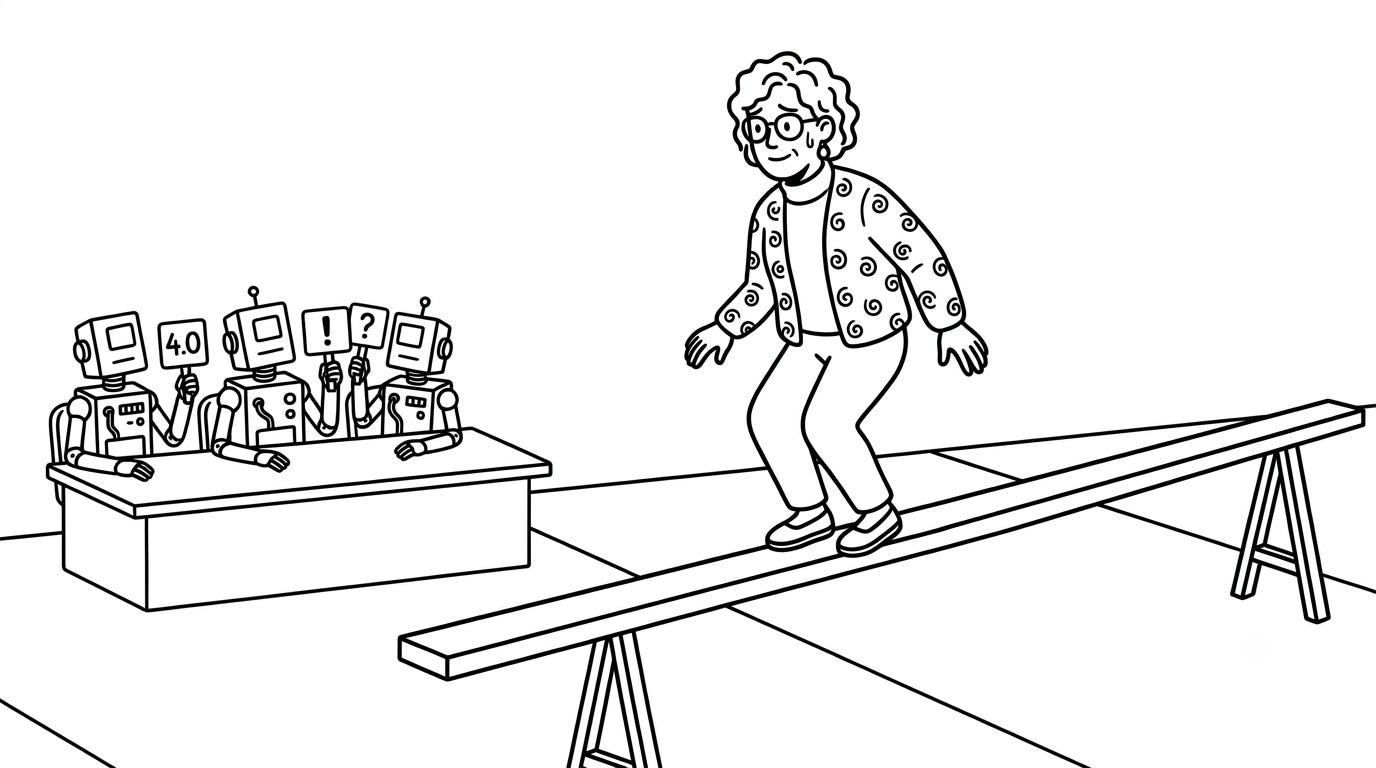
On a recent episode of Work Life, Ify Walker described the idea of the “work twisties” - times where you feel a disconnect between what you know and how to actually do it.
“I couldn’t fly a plane anymore, even though I’m a pilot. I couldn’t do a cartwheel, even though I’m a gymnast. I can’t run a meeting, even though I’m a CEO… these things that I have been trained to do for most of my life, I couldn’t do anymore.” - Ify Walker on the work twisties
I found this notion really resonant in a moment where a lot of us are feeling some amount of disorientation in response to how AI is coming into our workflows. The ways of doing design and research work that define our craft are changing so immensely that it’s creating a real sense of displacement and disconnect from how to do things we know in our bones how to do.
The way that I’ve always handled my imposter syndrome is by naming it. It doesn’t mean I don’t hear the voice everyday, but I have built an accepting relationship with it, and I do my best to focus on the real data before me, namely how I show up, get the work done everyday, and the positive outcomes that drives consistently.
In the interview, Ify describes a similar practice for approaching her work twisties: making a list of fact vs. story. What’s true, and what’s the narrative on top that’s twisting the facts and making things hard to approach?
That won't work for everyone. Having these insecurities is fairly universal; facing them is highly personal work. And certainly naming the twisties won’t make them go away; mine are still very much in the room as I write this.
But it helps me tell the difference between "I don't know how to do this yet" and "I was never any good at this," which feels like an important distinction right now, when so much of what we know how to do is changing shape.
Imposter syndrome and I go way back. The work twisties are new to me, but I have a feeling we’ll be getting to know each other well.
From never having been able to do a cartwheel but trying anyway,
Danielle.