


Dear Danielle,
A question I’ve been thinking about a lot - do all of these AI tools make us better researchers?
I talk to AI tool vendors on the regular as part of my job, sometimes multiple a week. Strip away the marketing speak, and every tool promises the same thing: efficiency and scale.
AI moderation = fewer researchers running interviews.
AI recording analysis = less time spent watching and cutting up recordings.
AI tagging and synthesis = less time spent doing the tedious work of sifting through all the transcripts and documents.
AI reporting = less time fiddling around with documents and slides.
In the age of “doing more with less”, research teams are pressured to deliver more actionable insights faster with fewer resources. So teams experiment, adopt and adapt.
But, do these tools make us better researchers?
Or maybe the real question: if we outsource all the “researcher tasks” to AI, are we still researchers at all?
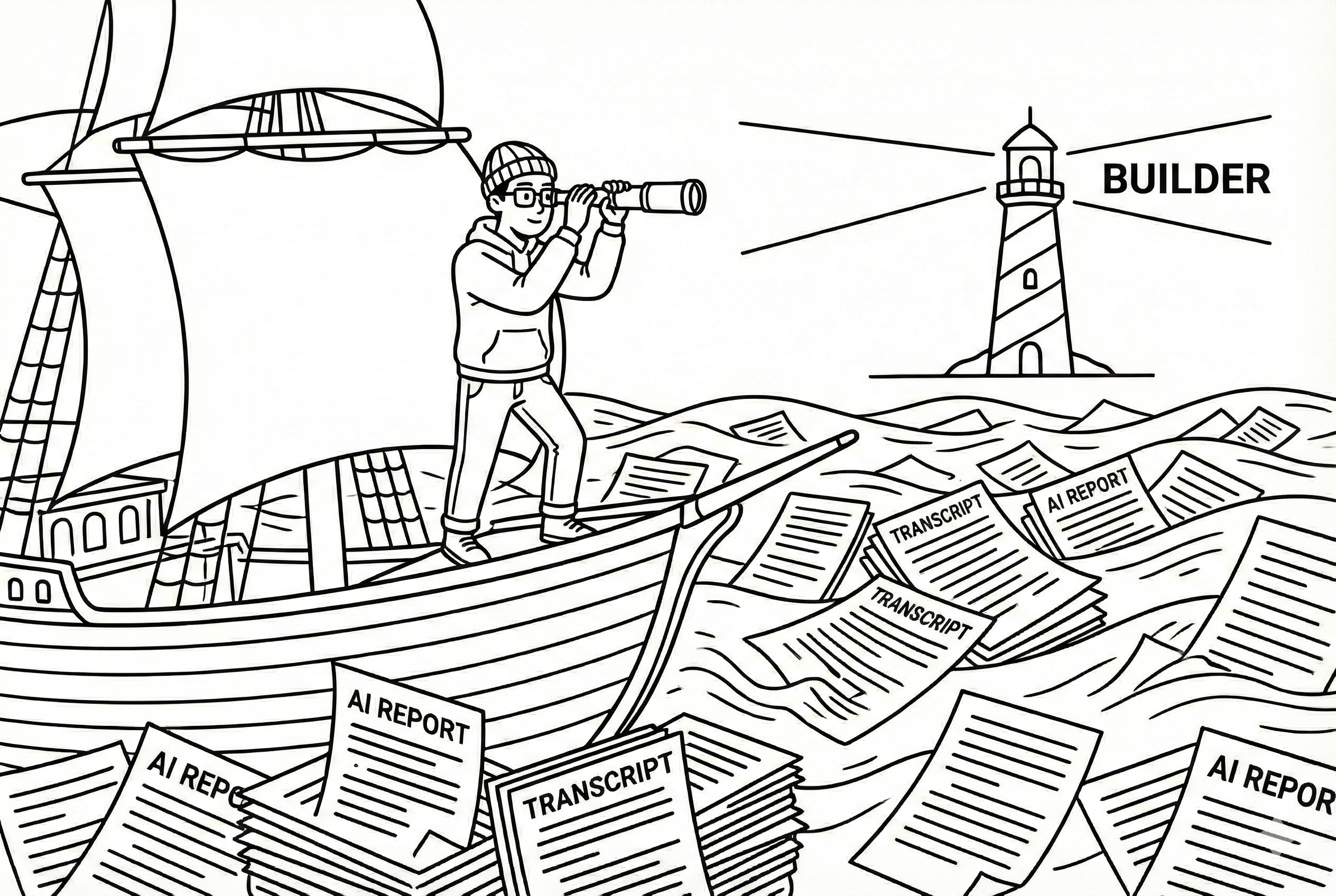
A big part of what makes a researcher a researcher is the knowledge, intuition and expertise we build over time from conducting the interviews, sifting through the transcripts, tagging and highlighting key excerpts, theming and grouping them, then storytelling all of that into a format that’s tailored to our stakeholders.
Research is also a deeply human exercise. Nothing can truly replace sitting across from a customer, listening and paying attention to, not only to what’s being said, but also what’s not said and almost said through facial expressions, gestures and body language.
This process, the journey of learning and iteration, I believe, is how we become researchers. In fact, the expertise and customer empathy a researcher builds with that painstaking process is what separates a great researcher from an average one.
By that measure, I’m a bad researcher. My current role no longer allows me to spend time in the trenches. Instead, I rely on the insights my team produces to storytell and influence product direction at my level.
But isn’t that the promise of all of these AI tools — for researchers to be less in the weeds, yet still produce actionable insights to shape and influence product decisions?
So I think an even better question to ask is: does AI make us a different breed of researchers?
Because on the other side of efficiency and scale, what these AI tools promise us is more time.
More time to build stakeholder relationships.
More time to understand organizational context and strategy.
More time to leverage said context and relationships, now coupled with the insights we gather from research, to influence product direction.
So by this new definition, I’d like to think I’m a pretty good researcher.
Or perhaps, the definitions of “good” and “bad” are shifting as the distance grows between crafters and their craft. As developers vibe-code, designers prototype with AI, and UXRs lean on LLMs and AI research tools for synthesis, our work becomes a less intimate experience.
And that loss of intimacy is a real risk — not just to us, but to the businesses that depend on our closeness to customers to make good decisions. The ability to hear what’s almost said, to translate a hesitation into an insight — that’s the capital researchers trade in. And it’s built through the grind, not despite it.
So maybe the answer isn’t to resist becoming a different breed. It’s to make sure that in all the time AI gives us back, we’re spending some of it closer to customers, not further away. The grind might look different, but the intimacy can’t be optional.
From struggling to sign into the Webex meeting link a vendor sent me,
Dave